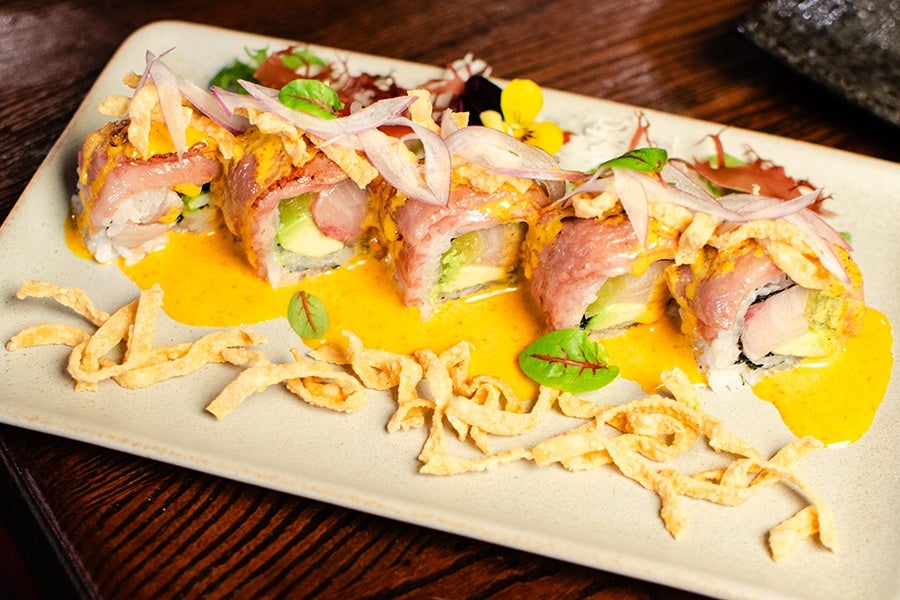
At first glance, the khao soi maki at Phat Thaiger in Malden seems like a familiar sushi roll: hamachi and avocado wrapped in seaweed and rice. Then northern Thailand crashes the party. Sliced red onions and crispy noodles pile on top, while a creamy yellow curry sauce pulls the whole thing in a completely different direction. It sounds strange, yet somehow it all makes perfect sense. It’s easily one of the tastiest bites in Greater Boston right now—just don’t call it “Asian fusion.” The phrase still carries the baggage of the 1990s, when fusion became shorthand for chefs mashing cuisines together because, well, they could. What’s happening around Boston now is something else: wildly creative, highly personal cooking with stories that started long before these restaurants did.
Fusion food has gone in and out of style, and the gimmicky ’90s didn’t do the term any favors. But people have been cooking this way for centuries, wherever cultures have crossed paths through trade, migration, colonization, or shifting borders. Nobody, for instance, calls gumbo “fusion,” though its West African, French, Spanish, and Native American roots make it exactly that. “There has been fusion before any of us were alive,” says Tracy Chang, chef-owner of Pagu in Cambridge, a restaurant with Spanish, Japanese, and Taiwanese influences. “There has been fusion before social media. There has been fusion before Escoffier wrote his book [Le Guide Culinaire], before Harold McGee wrote his book [On Food and Cooking]. It just hasn’t really been documented as such; maybe they weren’t using that word. Migration patterns dictate how cuisines evolve.”
Read Full Article at East Coast Traveler - Boston’s Fusion Food Is Better, and More Personal, Than Ever